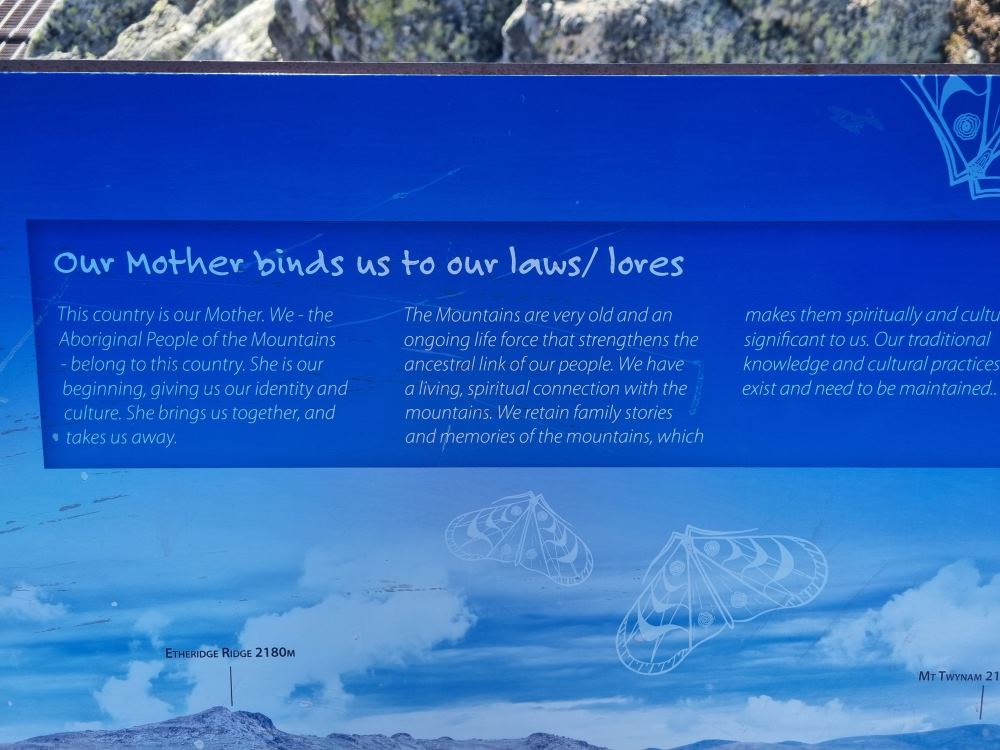
“This country is our Mother. We – the Aboriginal People of the Mountains – belong to this country. She is our beginning, giving us our identity and culture. She brings us together, and takes us away.” – Written by members of the Kosciuszko Aboriginal Working Group on behalf of Aboriginal people associated with the mountains.
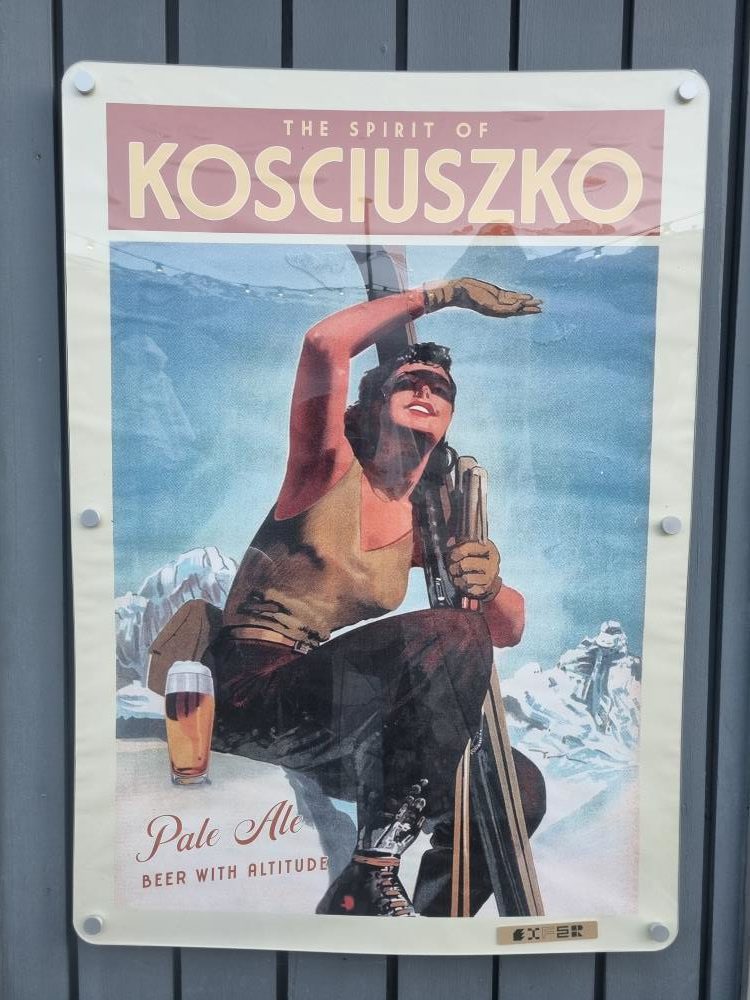
Mount Kosciuszko is the highest peak in mainland Australia, standing at 2,228 meters. It is located in the Snowy Mountains region of the Australian Alps, within Kosciuszko National Park, in the state of New South Wales (NSW), in the southeastern part of the country.
Etymology
The mountain was named by the Polish explorer Paul Edmund de Strzelecki in 1840, in honor of Tadeusz Kościuszko, a general and hero of the Kościuszko Uprising and the American War of Independence, because of its resemblance to the Kościuszko Mound in Kraków, Poland.
The mountain was “discovered” and mapped by an exploration expedition led by Strzelecki, along with James Macarthur and the indigenous guides Charlie Tarra and Jackey. Macarthur was searching for new pastures. Strzelecki wanted to study the climate, geology, and geography of the state of New South Wales and to publish his findings. This included identifying Australia’s highest peak, which Strzelecki reached on March 12, 1840.
The ascent was made from the Geehi Valley. There, Strzelecki used his instruments to make observations. In Macarthur’s presence, he named the highest peak Mount Kosciusko, after the famous Polish military leader who died in 1817.
Aboriginal Names
Recently, Indigenous Australian groups have advocated for the use of an Indigenous Australian name for the mountain, to coexist with the colonial name. In 2019, “Kunama Namadgi” was proposed as a dual name for Mount Kosciuszko. The proposal was submitted by the Toomaroombah Kunama Namadgi Indigenous Corporation, which states that the proposed name means “snow” and “mountain.”
The 7 Summits
As the highest peak on the Australian continent, Kosciuszko is a destination for climbers undertaking the traditional Seven Summits list (the Bass version). Compared to climbing the other Seven Summits, the ascent of Mount Kosciuszko is relatively easy, and the route can be completed in a single day.
Geography
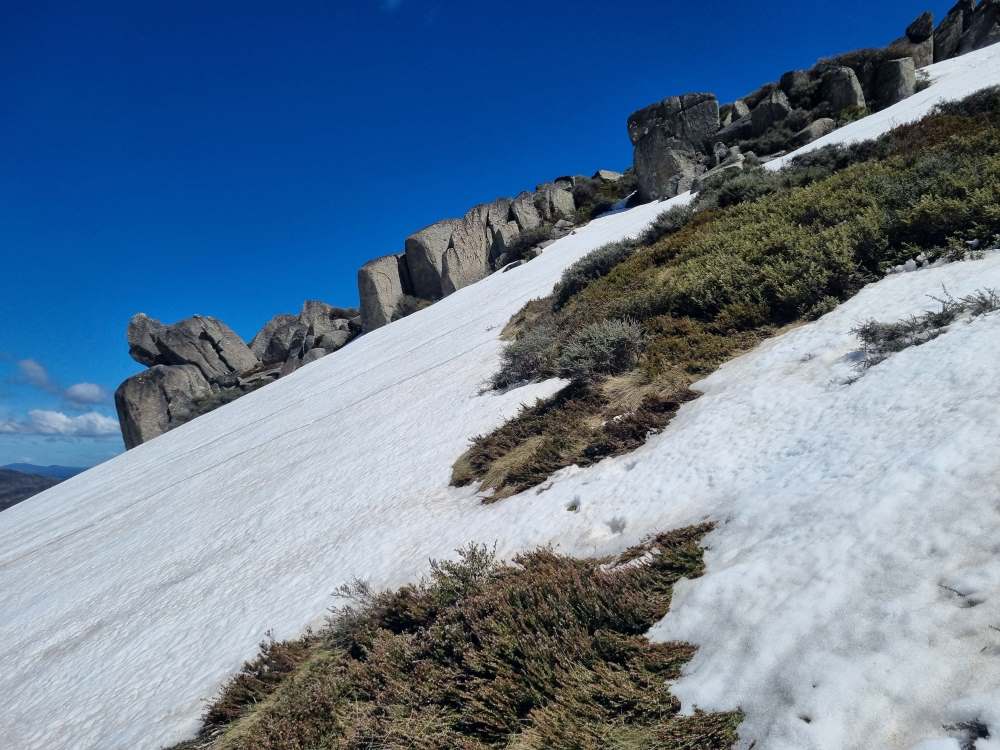
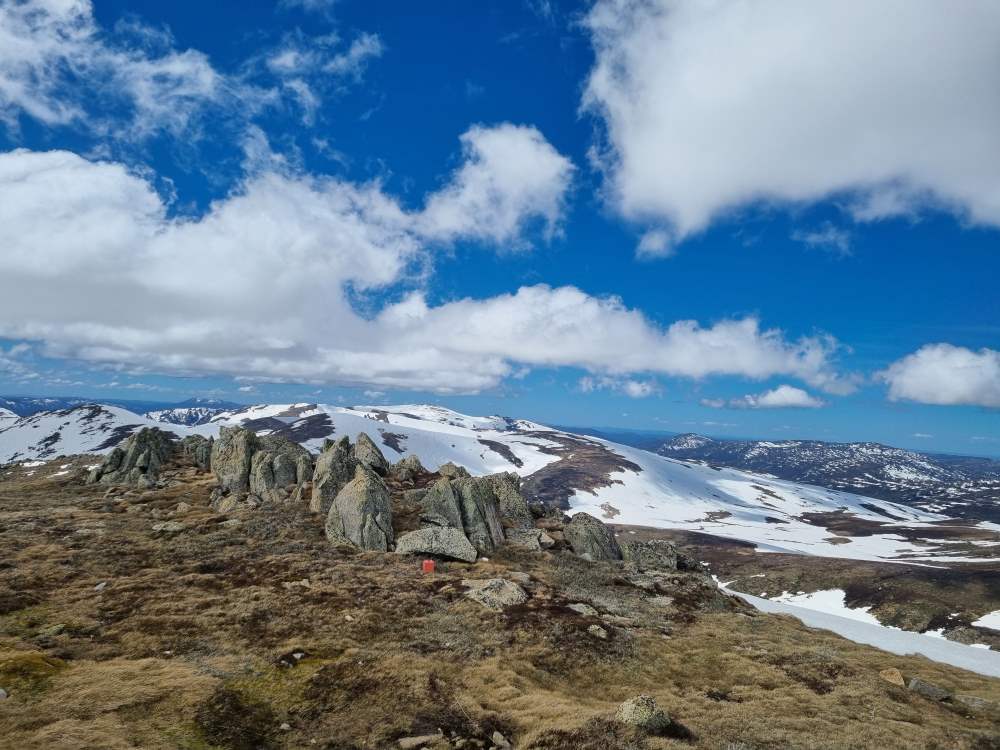
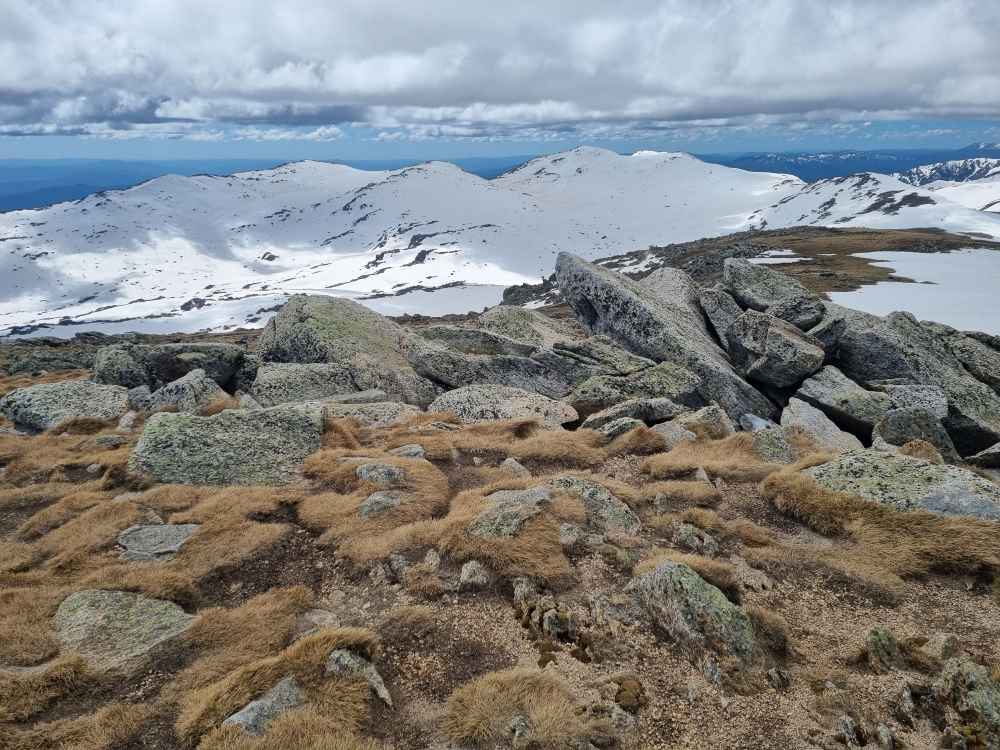
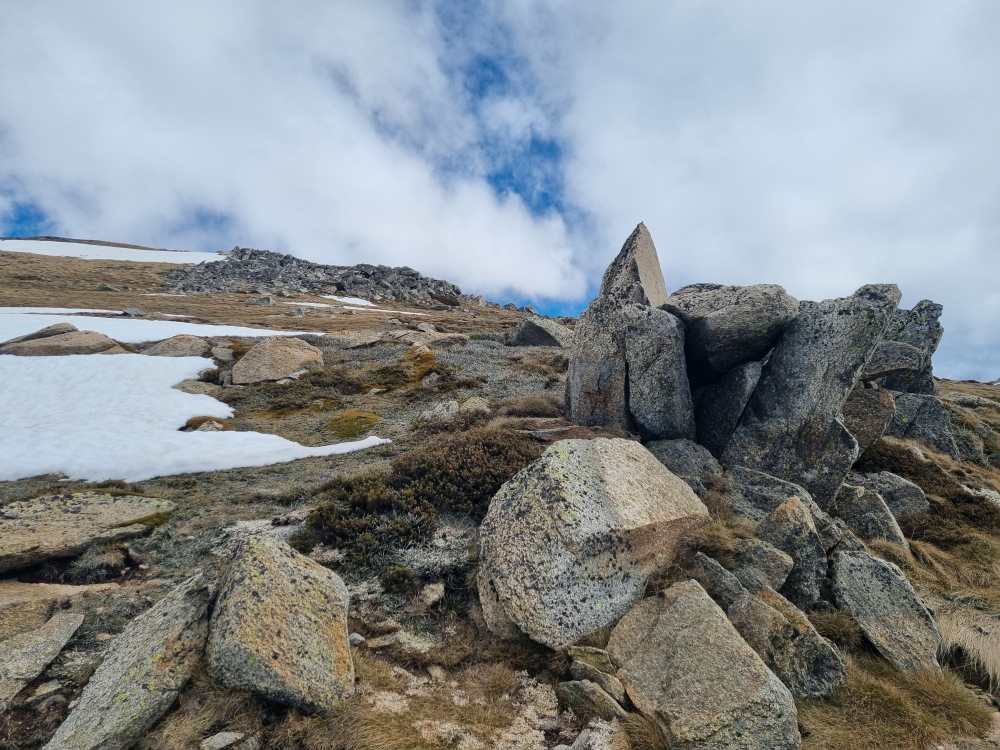
The mountain was formed by geological uplift. It was not the result of recent volcanic activity. At the summit, eroded granite intrusions can still be found in the form of large boulders, sitting atop more heavily eroded sedimentary rocks.
Reaching the Summit
Climbing Mount Kosciuszko poses no major difficulties for those accustomed to hiking in the mountains. Until 1977, it was even possible to drive from Charlotte Pass to within a few meters of the summit, but the road was then closed to public vehicle access for environmental protection.
Currently, you can have a pleasant hike starting from Charlotte Pass or a slightly more challenging climb starting from the village of Thredbo. In addition to these two routes, there is a less-traveled but more interesting route via Hannel’s Spur.
Route Description
- From Charlotte Pass: 9 km one way
The route follows the old road to Mount Kosciuszko. To reach the summit, start from Charlotte Pass, cross the Snowy River, and the trail gradually ascends toward Rawson Pass. From there, follow the trail to the summit of Mount Kosciuszko. - From Thredbo: 6.5 km one way
Start at the top station of the Kosciuszko Express chairlift in Thredbo. You can also hike up from the village via the Merritts Nature Track, which adds 4 km and 2 hours of climbing. - Hannel’s Spur, from Geehi Flats: 15.5 km one way
Hannel’s Spur offers the greatest elevation gain in Australia (1,800 m), and the hike can be completed in one or two days.
Snakes
While snakes are quite common in this area during the summer, in the winter they retreat to places sheltered from the cold, such as underground burrows, rock crevices, tree roots, or abandoned rodent tunnels. The snow also acts as a natural insulator, keeping the temperature stable beneath it.
If you decide to hike the trail during the summer, when snakes are commonly found, it’s good to know a few things about their behavior. Since snakes are ectothermic animals and cannot regulate their own body temperature, their entire daily routine revolves around temperature. In contrast to snakes, mammals and humans are endothermic animals, meaning they generate their own heat.
On a typical day, snakes stay in the sun to warm up and hide in the shade to cool down. Their hunting, movement, and digestion depend heavily on their body temperature. That’s why you can often see snakes lying on rocks or paved roads—they stay there to absorb heat so they can become active.
Morning is the warming-up phase: after a cold night, the snake is slow and lethargic. It basks in the sun (on rocks, trails, or roads) and even flattens its body to absorb more heat. Until it warms up, it cannot hunt or move easily.
Midday is the active phase: once its body reaches the right temperature, it becomes fast and alert, hunts, and digests efficiently. In short: a warmed-up snake = an efficient predator.
Evening and night are the slowing-down phase: as temperatures drop, the snake becomes sluggish again and seeks a safe place to rest.
As a means of adaptation during winter, snakes slow their metabolism almost completely until the warmth returns, entering a special state called brumation (similar to hibernation). They do not eat (they live off their fat reserves), move very little, do not sleep as deeply as mammals do during hibernation, and may occasionally wake up on warmer days.
Low temperatures also influence heart rate, causing a significant drop. In summer, the heart rate is ~20–40 beats per minute, whereas during brumation (winter), it can drop to about 2–5 beats per minute, sometimes even lower in extremely cold conditions. A human cannot slow down that much without dying, whereas for snakes, it is a normal survival strategy.
I’ve always found it difficult to tell the difference between “venomous” and “poisonous,” since I’m not a native English speaker myself. After learning more about snakes, I understood how to tell them apart: if it bites you and you die → it’s venomous (snakes). If you bite it and die → it’s poisonous (mushrooms, certain berries).
In Australia, four species of venomous snakes can pose a threat to humans. Although they all possess extremely toxic venom, they are generally shy and will avoid humans if given the chance.
1. Eastern Brown Snake (Pseudonaja textilis)
Extremely dangerous and very common, it is considered responsible for most snake bites and deaths in Australia. The Eastern Brown Snake is the second most venomous land snake in the world, affecting blood clotting and the nervous system.
2. Tiger Snake (Notechis scutatus)
Tiger snakes are among the most dangerous reptiles in Australia. They have a striped pattern resembling that of a tiger, with coloring ranging from dark brown/olive to black. They are commonly found in coastal wetlands, rivers, and streams in eastern and southern Australia. It is very fast and active and can become extremely defensive if cornered. Its venom is 20 times more potent than that of many rattlesnakes and consists of a potent mixture of neurotoxins, coagulants, and mycotoxins. A venomous bite can cause paralysis, internal bleeding, organ failure, and death in less than an hour if left untreated.
3. Red-bellied black snake (Pseudechis porphyriacus)
Its bite is dangerous (but rarely fatal). The snake has a glossy black back, with bright red or pink sides and belly. It lives near water sources, such as swamps, streams, and rivers, and is less aggressive than brown or tiger snakes. Generally, they prefer to retreat, though they will defend themselves if provoked. Their venom causes serious illness and painful bites, but no official fatalities have been recorded in Australia.
4. Mountain Copperhead (Austrelaps ramsayi)
Very dangerous. It is a medium-sized snake (2 meters), usually dark brown to black in color, sometimes with a “copper”-colored head. It can be found in cooler regions at higher elevations (such as the alpine areas of NSW and Victoria), preferring forests and wetlands. It is discreet and non-aggressive, and these snakes prefer to avoid contact. If cornered, it will hiss and bite. It has a potent neurotoxic venom, but due to its shy nature, it is responsible for very few bites.
Spiders
There are many venomous spiders in Australia, but the actual risk to tourists is very low. Since the trail to the summit is heavily trafficked and open, most spiders stay in burrows, under rocks, or in vegetation, avoiding contact with people.
However, only a few species are truly dangerous:
• funnel-web
• redback
• mouse spiders
Although many of these spiders pose no threat to humans, a few are considered very dangerous. The famous funnel-web spider has a bite that is still considered dangerous, as its venom contains powerful neurotoxins that affect the human nervous system.
Funnel-web spiders are typically robust, glossy black spiders with a hard exoskeleton, large fangs, and long, powerful legs. Their bodies can reach up to 5 centimeters in length, and their leg span ranges from 7 to 10 centimeters, depending on the species.
Although they are capable of causing death in as little as 15 minutes, there have been no reported deaths since the development of the antivenom in the early 1980s
Where are funnel-web spiders found? These spiders prefer cool, damp environments, often in shaded areas protected from direct sunlight. They are found primarily in eastern Australia, particularly along the eastern coast of New South Wales and in certain parts of Queensland.
Although funnel-web spiders are often found in populated areas, they are not naturally aggressive toward humans. They act defensively and will bite only if threatened or accidentally disturbed.
Symptoms of a bite may include: tingling or numbness around the mouth, sweating, muscle twitching or spasms, difficulty breathing, increased heart rate or blood pressure, and increased saliva production.
If you are bitten by a spider, remain as calm as possible, remove any jewelry from the affected limb, firmly apply a compression bandage, limit movement by applying a splint (only if you have one on hand), and go directly to the hospital or call 000.
As a general rule for staying safe while traveling, do not reach under rocks or into holes, and avoid carelessly picking up wood or rocks. Closed shoes are sufficient during the day, and at night or upon waking, check your boots.
Bali to Melbourne
12:00 p.m. – Bali. It’s time to board, and I’m glad to hear only English spoken all around me. It’s so nice to be able to understand everyone. After a 5½-hour flight, we arrived in Melbourne at 8:30 p.m. Because everything is digital and automated, you go through immigration on your own at the airport, and only one security agent glanced briefly at what I’d written on the entry form. My luggage arrived, and a smile spread across my face. After my experience in Argentina on Aconcagua, I’ve come to be afraid every time I fly because of the possibility of having delayed bags. I’ve checked off another milestone. I’ve entered Australia.
I think about how much work people needed to do before the Internet. You had to research and inform yourself about so many things from books. And of course, many things didn’t work out. I think that’s where the saying comes from: “Things rarely go exactly according to plan.” That’s why I think it’s good for everyone to update their own way of thinking, and I emphasize this in the NLP communication and personal development courses I teach in Munich.
Nowadays, because we have access to so much information, we can make our plans much more accurately, and there are fewer and fewer mistakes. We just have to take our time to do the research. And more importantly: we have to enjoy the process. And here I’m referring to the entire process: the climbing of the summit, the planning and the physical training.
From the airport, I ordered an Uber, and at the hotel I noticed something that had also caught my eye in Indonesia. The temperature control had no heating setting—only cooling.
Ever since I was in Germany, I’d done a lot of research on snakes and spiders, so I decided to stay only at very good hotels—and by good, I mean ones that meet a certain standard of cleanliness. I don’t want a snake to crawl out of the air conditioning vent or the toilet bowl. I’ve seen too many videos online showing such incidents.
After entering the room, I did what I’ve been doing for the past weeks on the road: I sprayed the entire bed with insect repellent to avoid any surprises. Only after that ritual did I think about food, and as usual before a climb I got something I know for sure won’t trouble me: pizza.
Melbourne
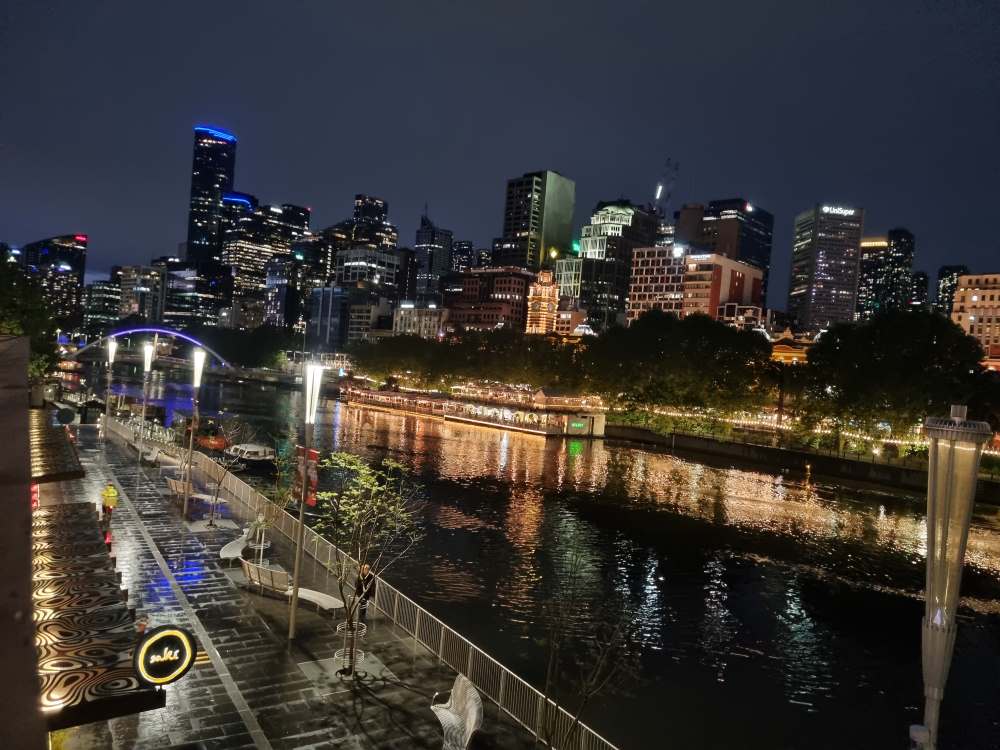
To get to Mount Kosciuszko, I first have to get to Canberra, so I planned my trip from home like this: I’ll land in Melbourne, stay there for two days, then head to Canberra and on to Thredbo. I’ll stay there for three days and then continue to Sydney, where I hope to have another two days.
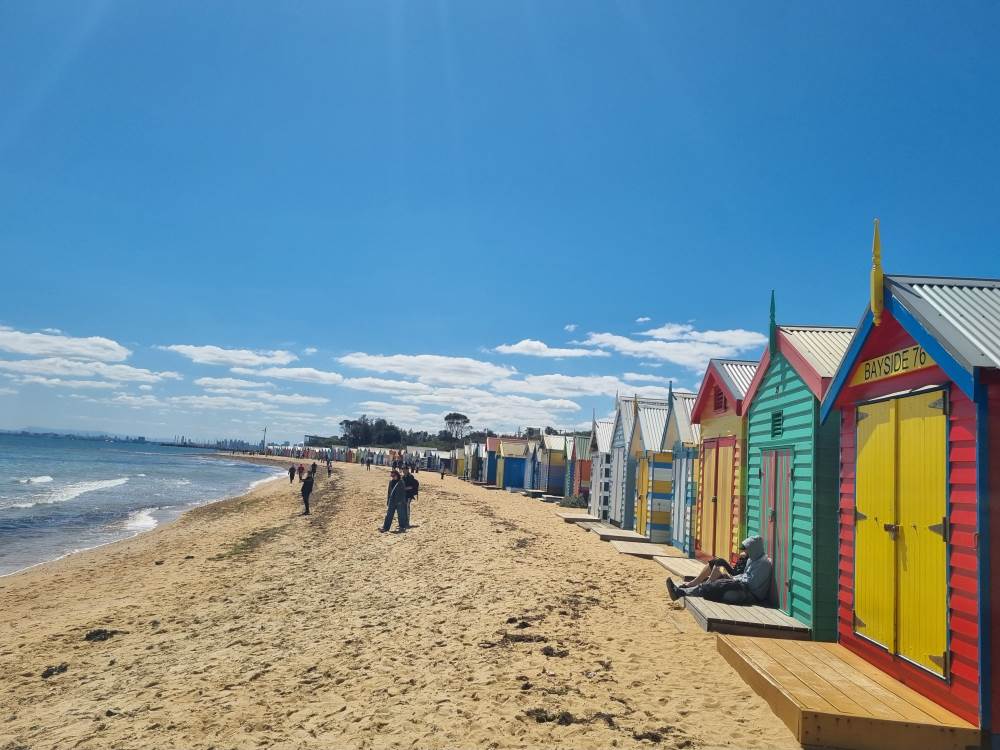
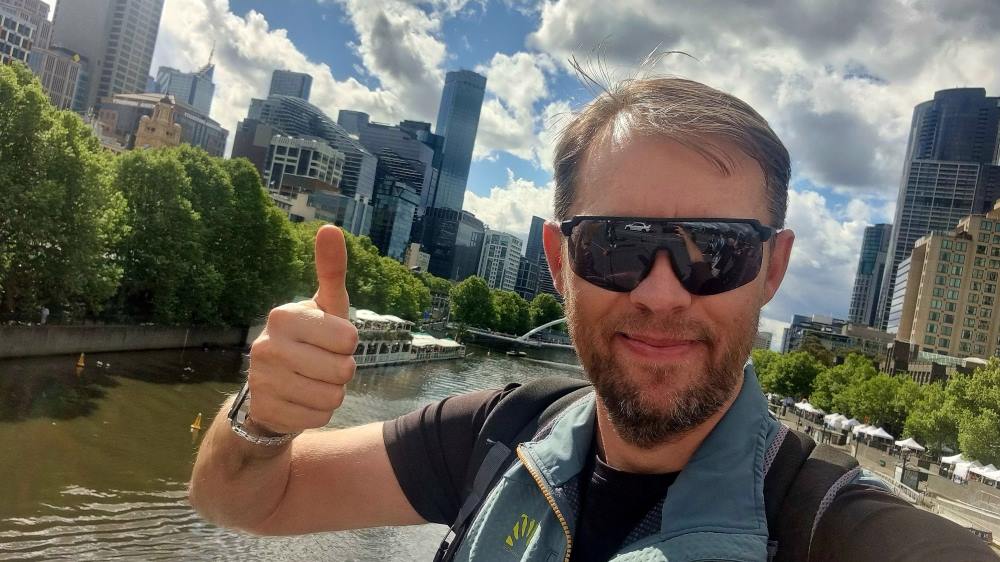
Everything went according to plan. I checked the weather on the mountain, and for two days I switched to “tourist mode,” putting my hiking boots aside and wearing my sneakers extensively, taking over 30,000 steps a day. I was so tired, but I knew I didn’t know when I would be here again.
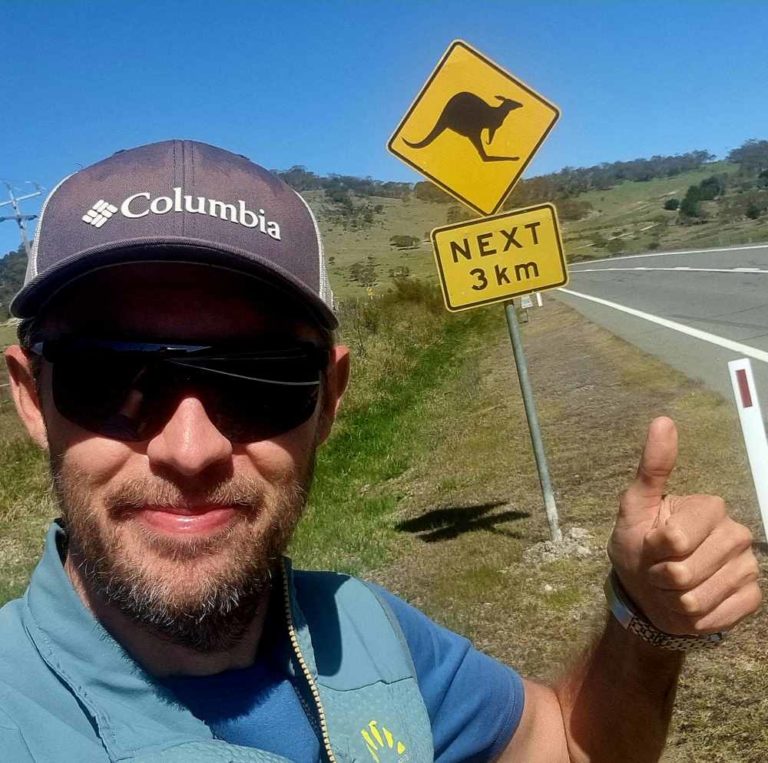
From Melbourne to Canberra, I decided to take the bus to make the most of the night: I left at 10:00 p.m., and by 6:00 a.m. on October 14, I was in Canberra. From there, I took an Uber again because it was the transition between seasons (winter to spring), and local bus service wasn’t running frequently. Everything went perfectly, and around 11 a.m. I arrived in Thredbo, a small ski village, from where I planned to begin my ascent to the summit.
The weather was on my side—plenty of sunshine, warm temperatures, and fresh air—and after checking in, I packed my backpack with warm clothes: gloves, two hats, water, and some snacks. Just one step outside the small hotel, the wind’s touch reminded me of the Alps, and I knew that if it were just a breeze down below, it would be quite intense at the summit. I was right, because within a few hours I would feel gusts of 50 km/h. For many people, that is not so much, but the mountaineers know exactly what the impact of such a wind is when it’s only zero degrees Celsius outside.
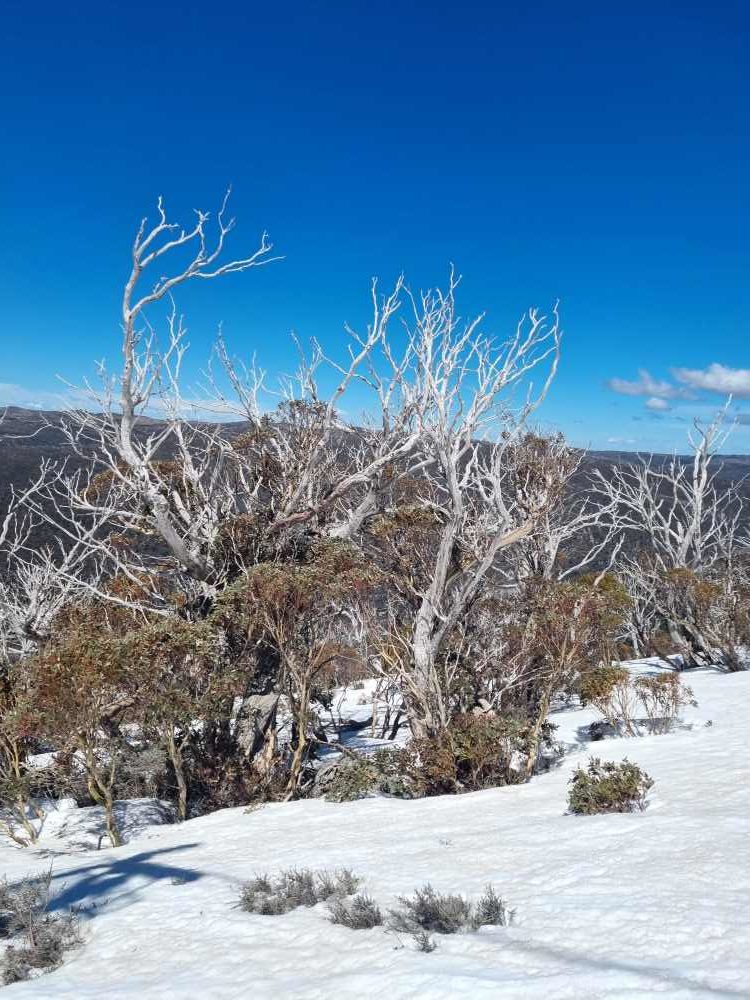
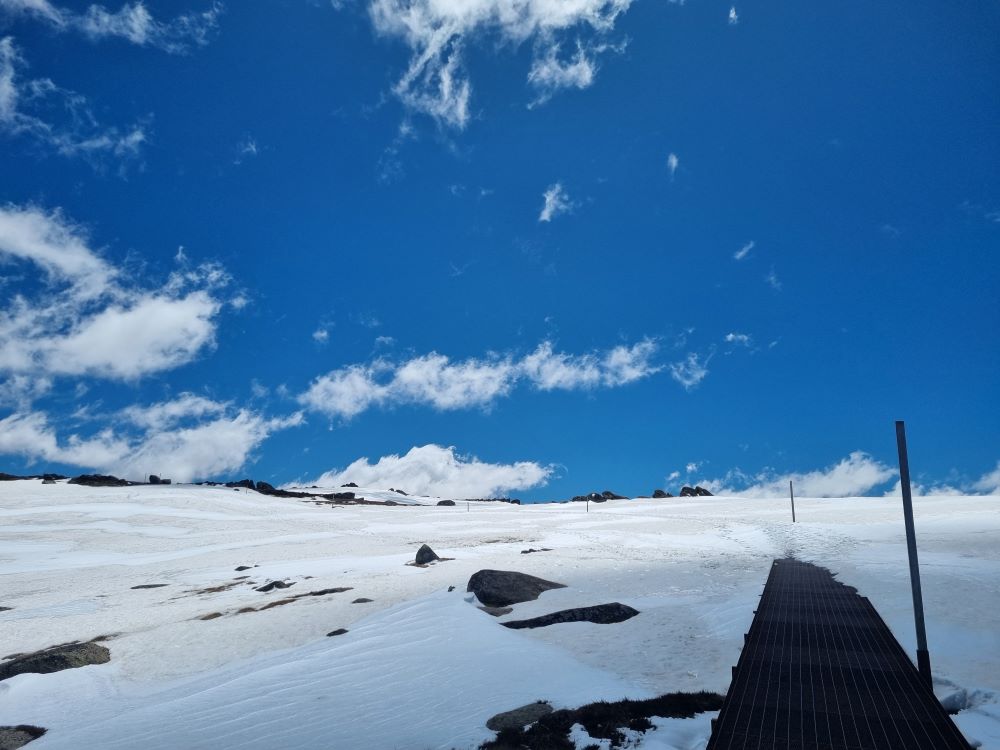
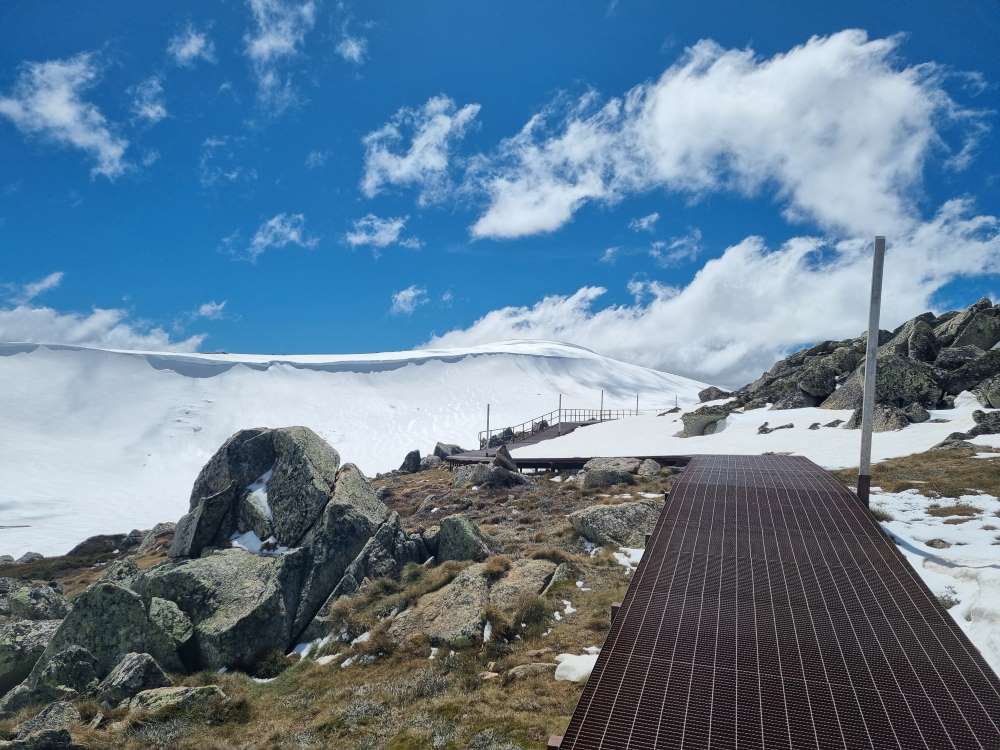
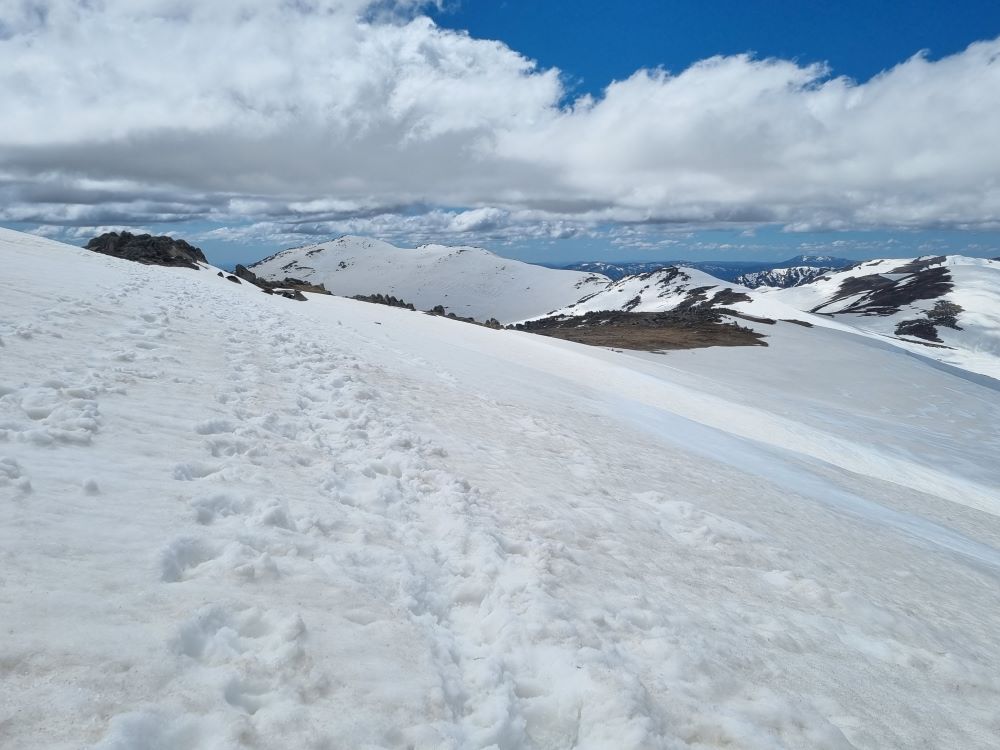
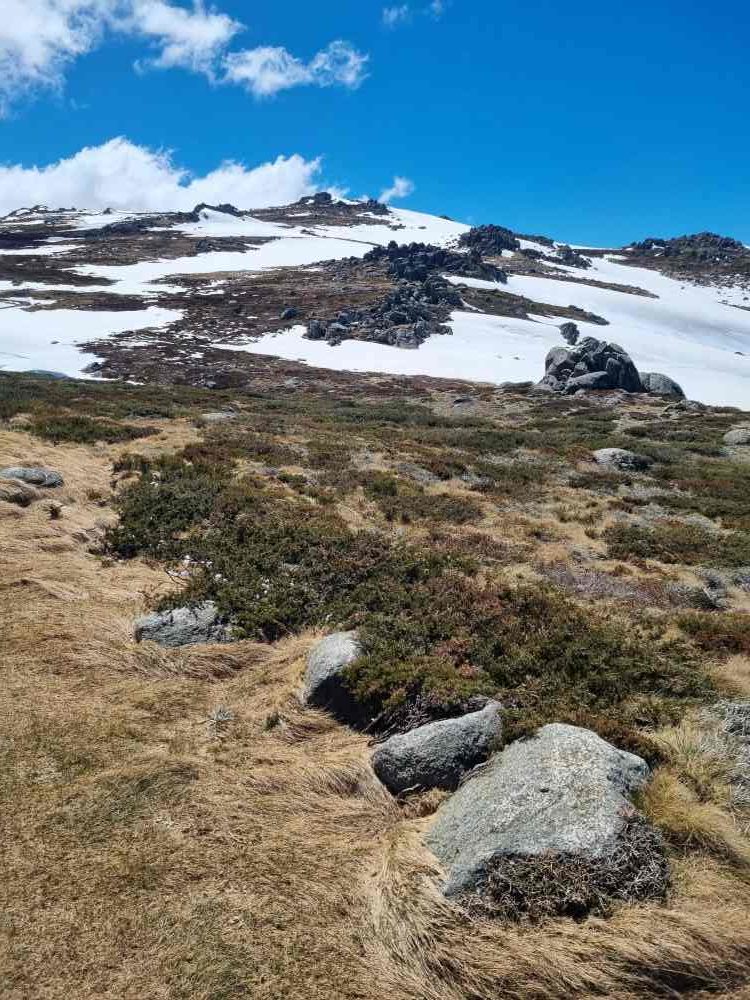
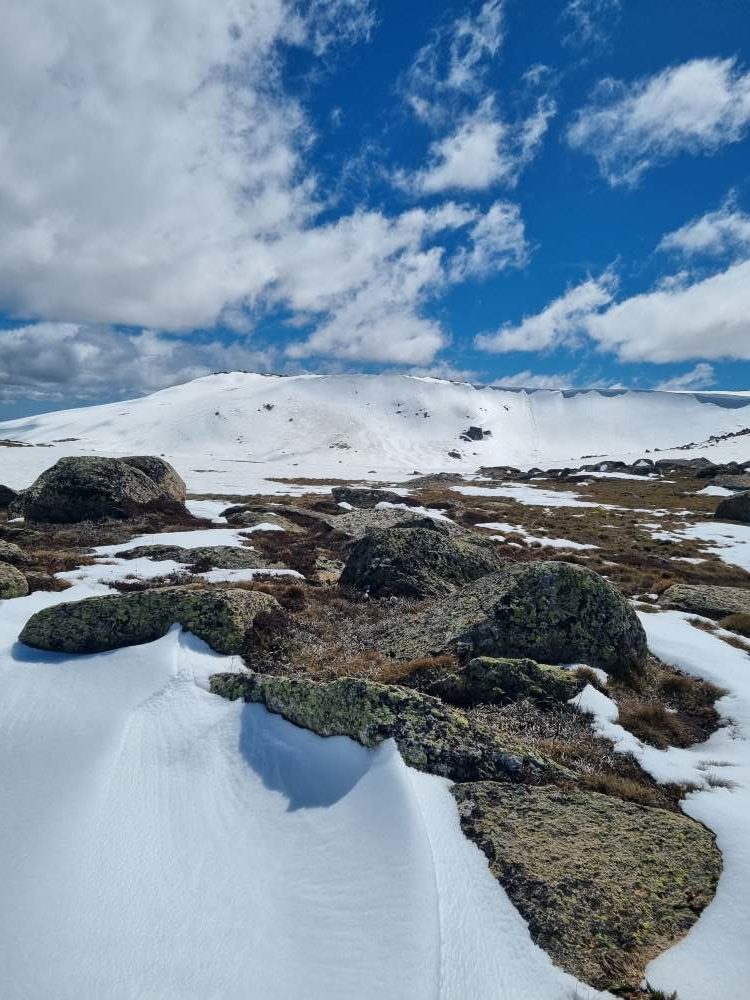
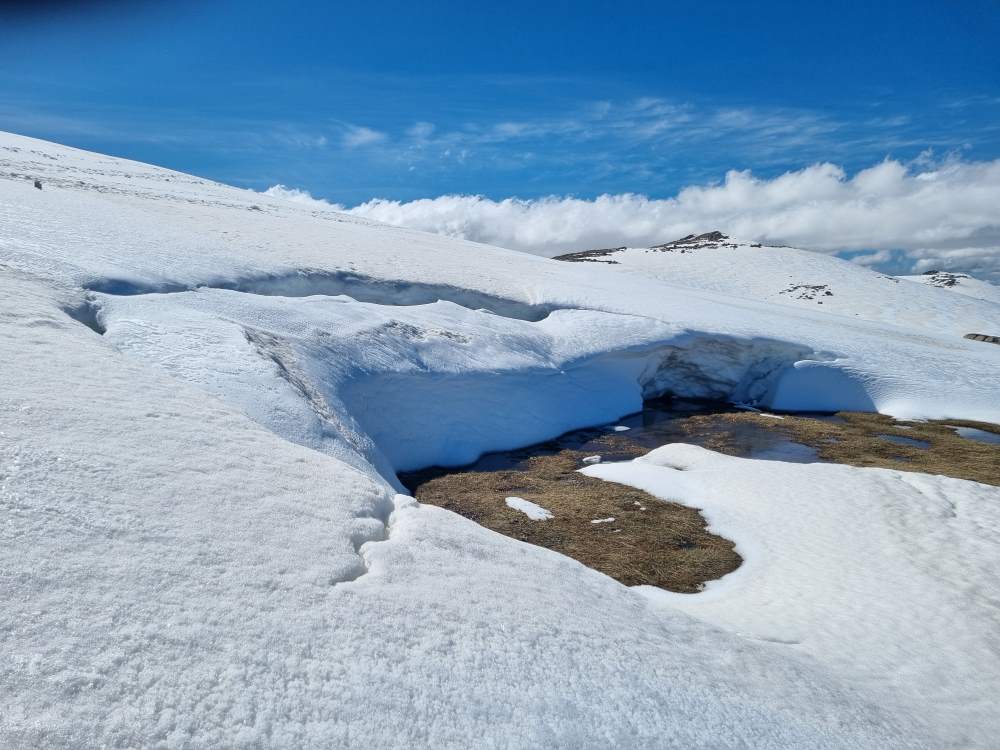
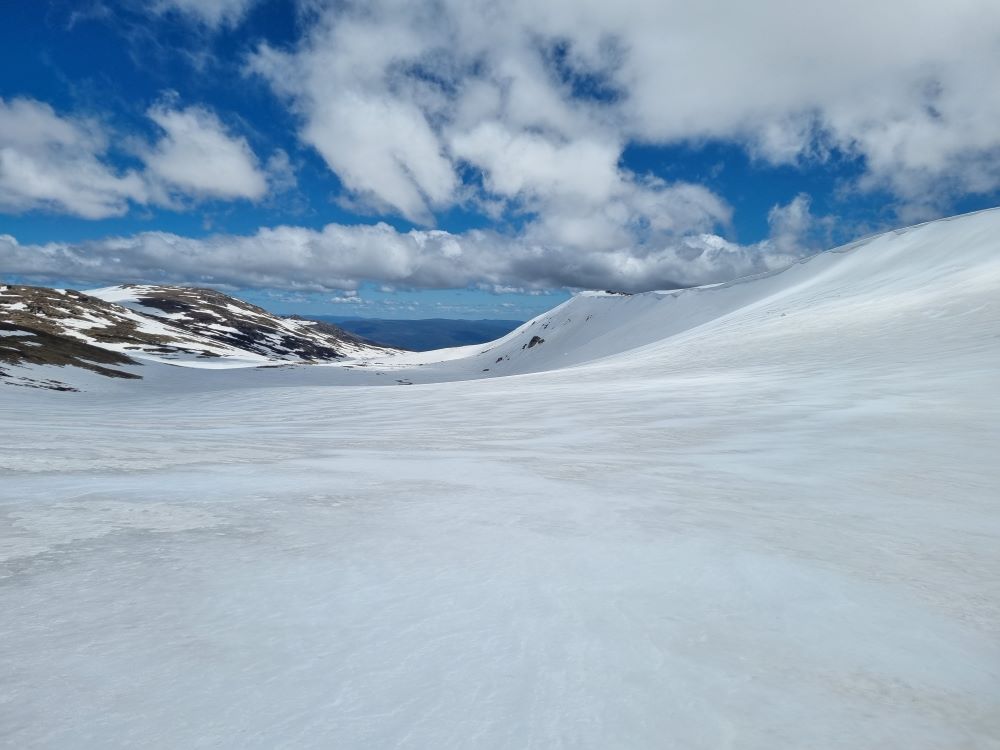
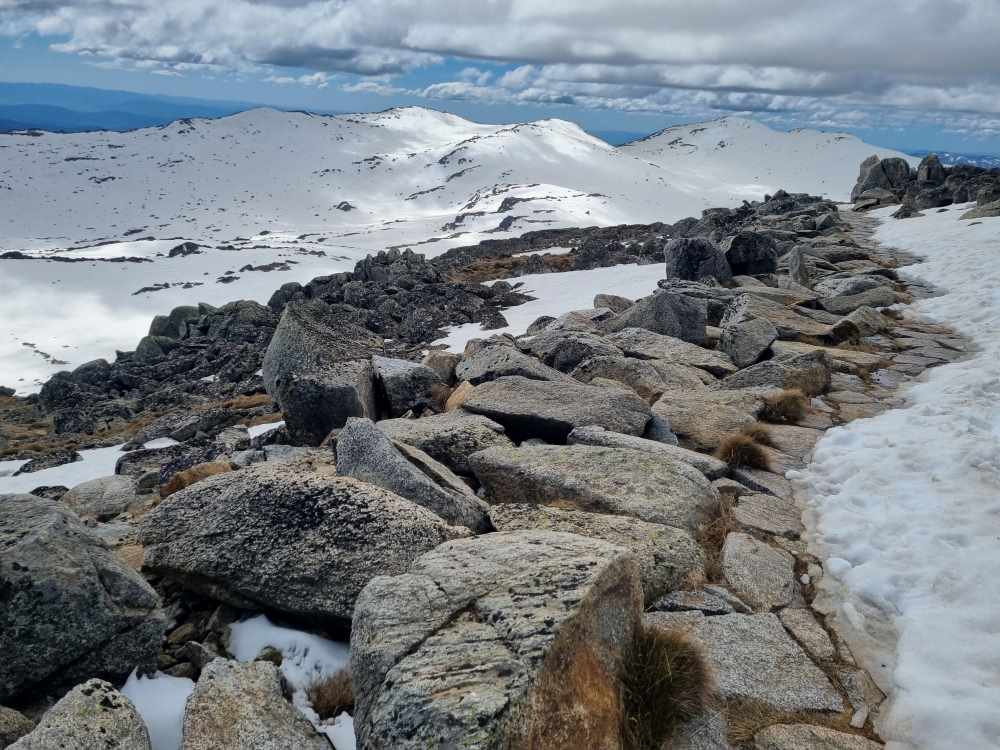
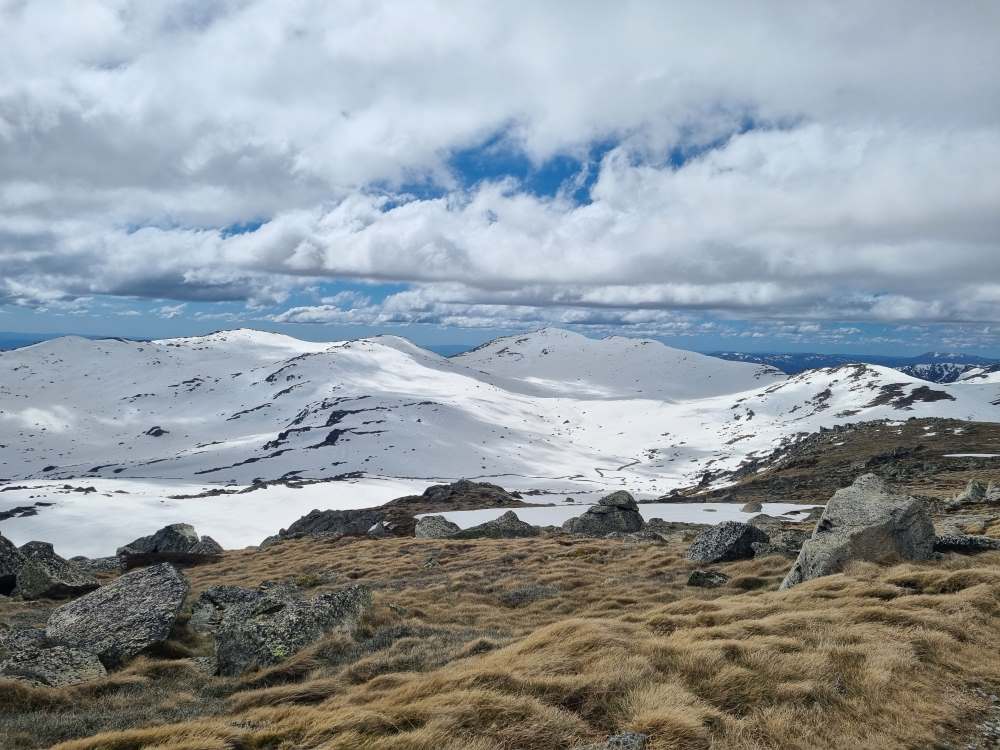
On each continent, the landscape is different. While two weeks ago I was at base camp on Carstensz Pyramid and the landscape was almost lunar, here I noticed the transition from winter to the warm season. The snow was still there, but there were also many melted areas where I could see the metal railing along the trail to the summit. I was very lucky because, as I mentioned above, the snakes were still hibernating during this time.
I set out from the hotel for a walk, but when I realized the tour was doable, I told myself I’d keep going until I got tired. I think it was the adrenaline or the joy of being there that allowed me to hike so far.
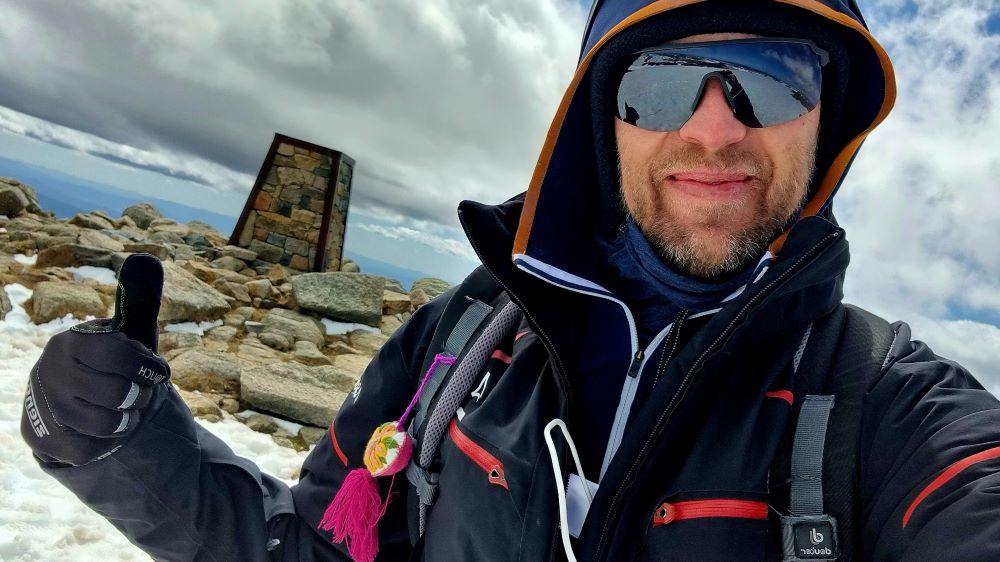
The trail was absolutely beautiful, and after about three hours, I reached the summit of Australia. I was overjoyed when I thought about where I’d started, mentally mapping out the world with those two landmarks: Munich and Mount Kosciuszko, the summit of Australia. As I do almost every time, I thought about how it all began, and I felt the thrill of fear I’d experienced a year ago, when I wrote that goal on the whiteboard in early 2025. I remembered how, back in January, I’d stare at the blank whiteboard, almost trembling as I wrote “Indonesia and Australia” on it. The thought transformed from the initial—”Will I be able to do this?”—into “How can I make this happen?” The plan took shape step by step, and my fear gradually reduced.
With the mountain all to myself and the imposing stone monument, taking a break from the fast pace I had in the past few months, I took a few moments to reflecting on what a journey this had been! I now get to live, see, and hear what I’ve read about in the last few years. Hmm… what a journey it has been so far!
Along the way, I think I only met about 5 or 6 people. Some were just out for a short hike, waiting for better weather, and only 2 were trying to make it all the way to the top. It’s no wonder not everyone set out for the summit, since the season officially doesn’t start for another 2 months or so.
I got back to Thredbo around 5:30 p.m., fulfilled and happy. Even though my stomach was making itself known, I’d almost forgotten about my hunger. I decided to celebrate the success of the trip: 2 out of 2—Carstensz Pyramid and Mount Kosciuszko. And most importantly, I made it back down safely after both summits.
The only pub in the village had its doors wide open, so I went straight in and ordered the full house special: a burger, fries with cheese, and a beer. What a full day it’s been today.
I woke up slowly, gently opening my eyes and looking around curiously. Where am I today? In what city? In what hotel? I remembered yesterday’s success, so I allowed myself to linger in bed a little longer. 2 out of 2. And a smile spread across my face once again.
The next day I set off for Sydney, and after a few-hour stop in Canberra—where I managed to visit the Australian Parliament—I took the train to Sydney. How nice that I still have two days left to see a bit more of Australia.
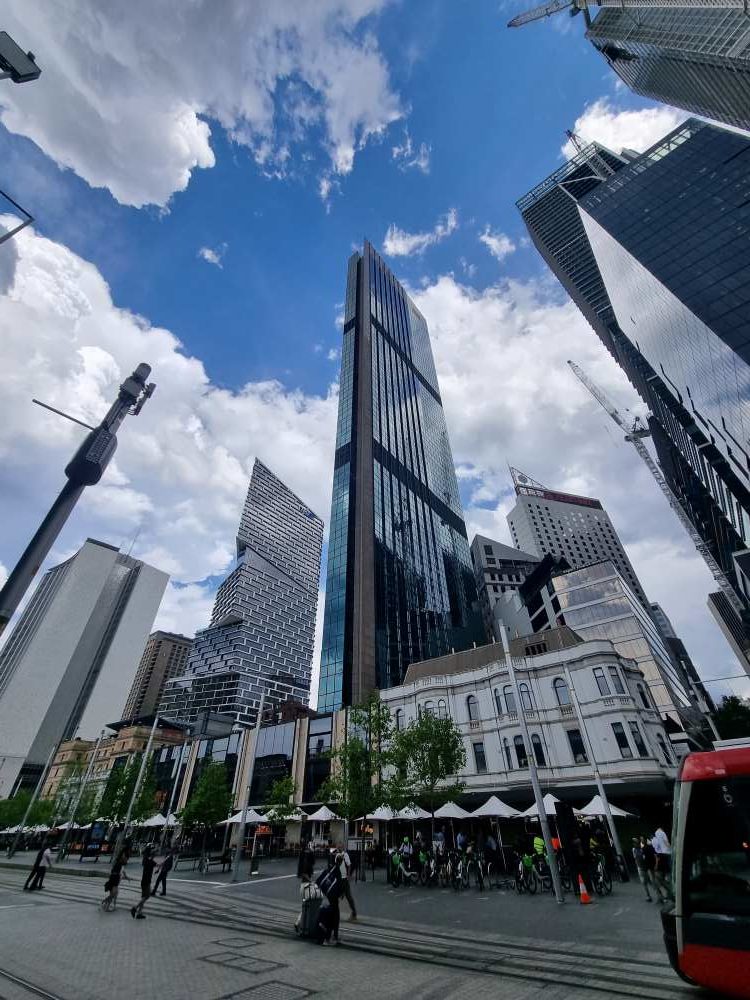
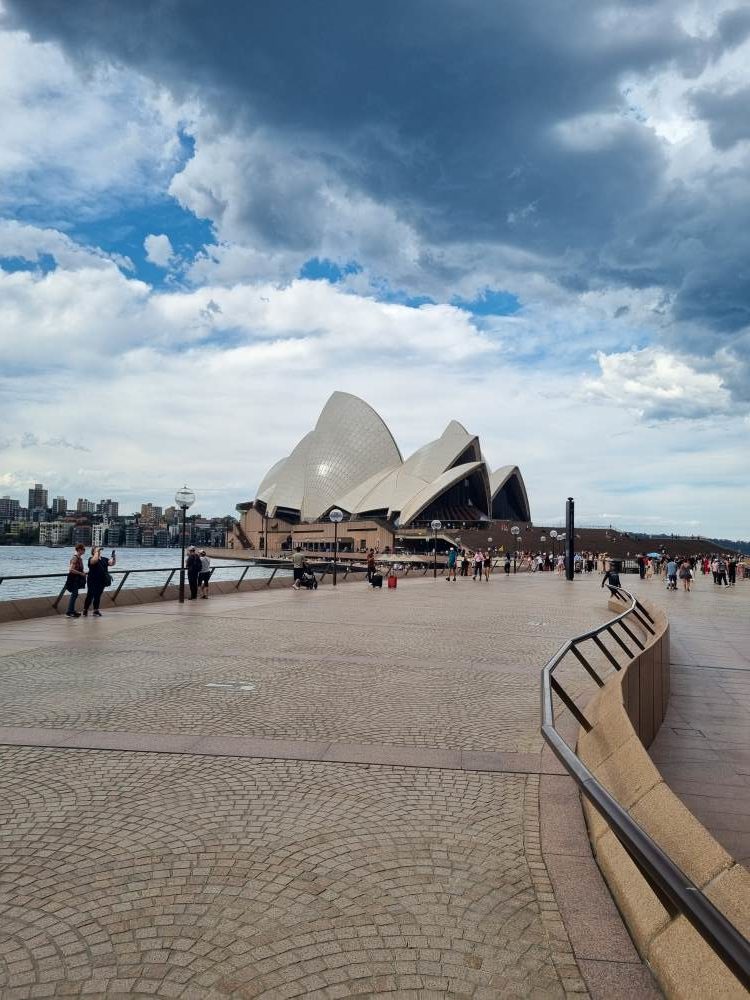
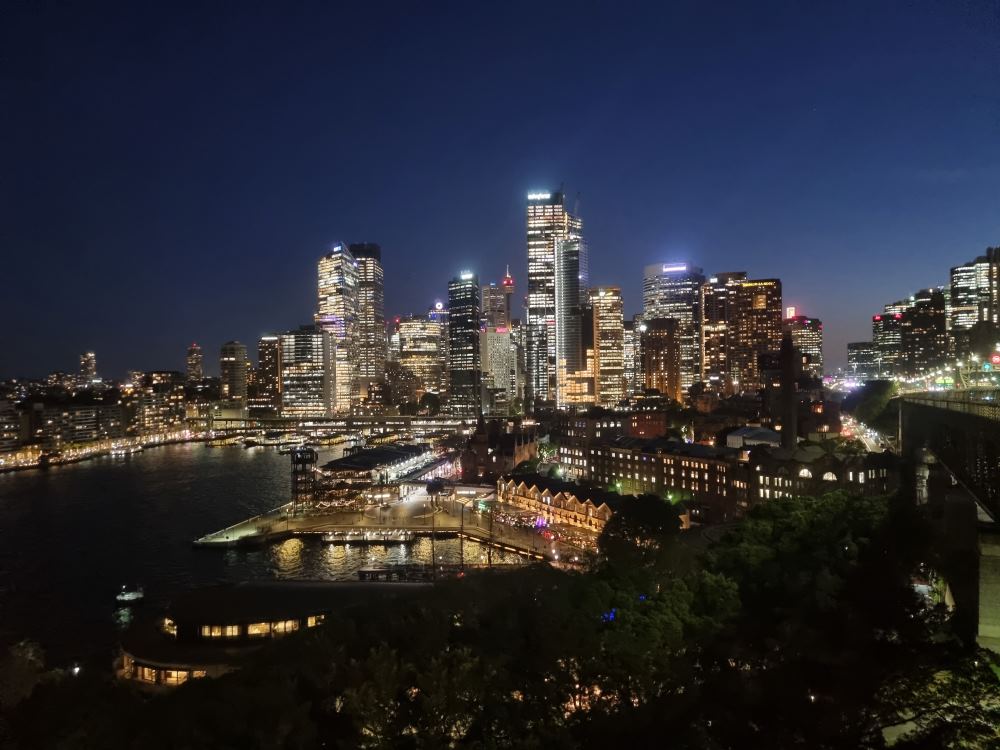
My sneakers racked up another 30,000 steps in “tourist mode,” and I managed to see a small part of Sydney. I took a tour of the harbor, made it all the way to the top of the Sydney Harbor Bridge, visited the famous opera house, and even made it to a concert in the main hall.
After a 10-hour flight from Sydney, I’m sitting in the airport in Bangkok, just looking around. People are rushing by—some laughing, some stressed, some on the run. Even though I had 9 hours to wait, time passes naturally, and I didn’t feel any pressure or any discomfort at all. I was just sitting there, smiling. Bali, Timika, Basecamp, Carstensz Pyramid, Melbourne, Mount Kosciuszko, Canberra, Sydney. What a journey!
There was still an 11-hour flight to Munich ahead, and I could say I would be done. I smiled again, and the cold wind from the summit touched my face one last time. There’s an inner peace, a sense of fulfillment, and a feeling of joy that I wish more people could experience. The noise of the airport silences, I close my eyes, and after a few moments, the pilot’s voice wakes us all up: “Meine Damen und Herren, herzlich willkommen in München.”